They Fell in Love With Someone You Used to Be: On the Quiet Grief of Outgrowing Your Own Fame
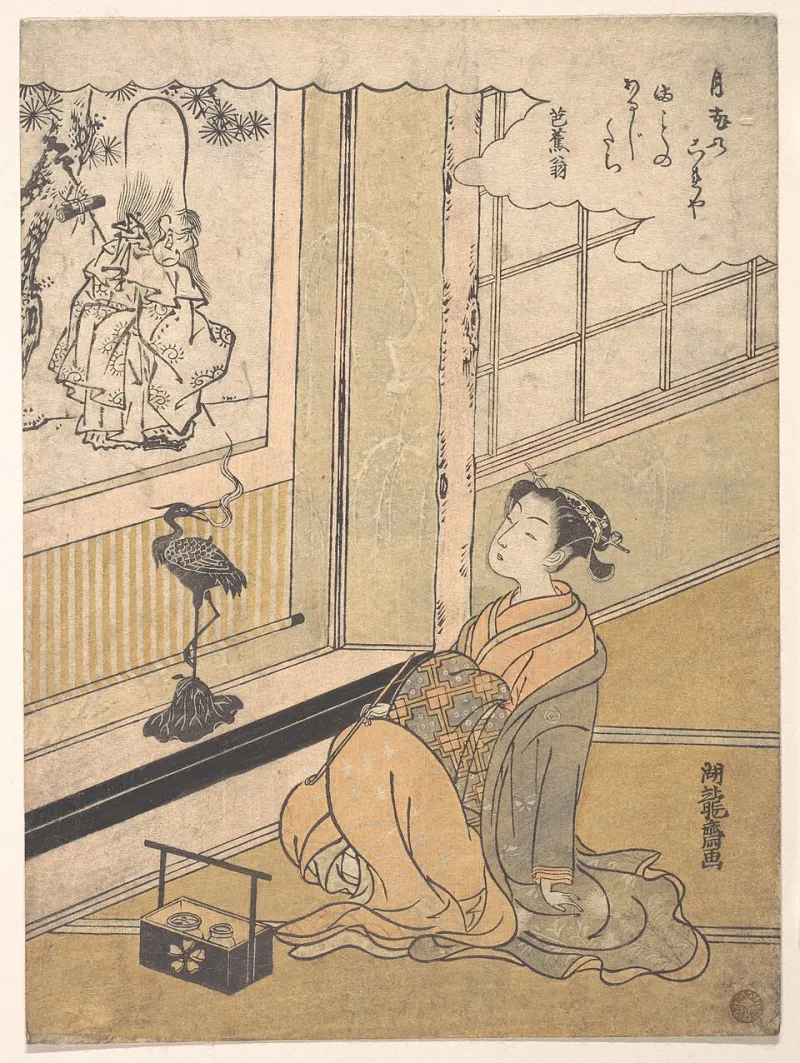
Photo: Isoda Koryūsai, CC0, via Wikimedia Commons
There's a particular kind of loneliness that doesn't get talked about much in creative circles. It's not the loneliness of being ignored — that one, at least, has a certain freedom to it. This is something more disorienting: the loneliness of being known, deeply and genuinely known, but known for something you no longer are.
I've sat in rooms full of people who were genuinely happy to see me. Warm faces, real affection, the kind of energy that should feel like coming home. And underneath all of it, this quiet, persistent hum: they're not seeing me. They're seeing who I was ten years ago, or twenty, or thirty. They're seeing a song I wrote when I was living a completely different life. They're seeing an image, a moment, a version of me that I've long since folded up and put away.
And you can't say that out loud in those rooms. You just smile and receive it, because what's the alternative? Correcting someone's love for you feels impossibly rude. So you carry it — this strange, sweet burden of being adored for someone else.
The Gap Nobody Talks About
Every artist who's been around long enough eventually faces what I'd call the identity gap: the distance between who you are now and who your audience believes you to be. It's not a failure. It's almost inevitable. People encounter your work at a specific moment in their lives, and that encounter becomes fixed. The song that helped them through a breakup in 1987 isn't just a song anymore — it's a landmark in their personal history. It belongs to them in a way that has almost nothing to do with you.
That's actually beautiful. I mean that sincerely. The fact that something you made took root in someone else's life and grew into something meaningful — that's the whole point of making things.
But here's where it gets complicated: when that fixed image starts to feel like a cage.
When you show up to a conversation, a show, an interview, and you can feel the audience quietly waiting for you to be that person — the one from the record, the one from the story they've been telling about you for decades — and you know, with absolute clarity, that you are not that person anymore. You've grown, shifted, gotten stranger and more specific and more yourself. But the version of you they're holding onto is simpler, more familiar, more comfortable.
The Psychological Weight of It
I want to be honest about how heavy this can get, because I think a lot of artists pretend it doesn't affect them.
There's guilt. You feel guilty for changing, as if your evolution is somehow a betrayal of the people who connected with your earlier work. There's a voice — sometimes internal, sometimes coming from actual comments or letters — that says why can't you just be what you were? And if you're not careful, you start to believe that voice has a point.
There's also a kind of erasure that happens. When the public narrative about you is dominated by a single era or a single piece of work, everything else you've done gets flattened. Your current projects, your present-tense self, your most recent thinking — all of it gets filtered through the lens of who they already decided you are. It's exhausting to keep pushing against that gravity.
And then there's the isolation that comes from not being able to name any of this without sounding ungrateful. Because the world doesn't have a lot of patience for artists who complain about being loved. It reads as entitled. So you stay quiet, and the gap between your public self and your private self widens.
What You Owe Your Audience (And What You Don't)
Here's what I've come to believe, after a lot of years and a lot of rooms full of people seeing someone slightly different than who I am: you owe your audience your honesty. You do not owe them your stasis.
The people who love your work — the real ones, the ones who've followed you across decades — they don't actually want a museum exhibit. They want a living, breathing person. They want to see what happened next. They might be surprised by it, even resistant to it at first, but the alternative — performing an old version of yourself indefinitely — is a kind of slow creative death that ultimately serves no one.
I've watched artists freeze themselves in amber trying to protect the love of their audience, and it never works. The work gets brittle. The performances start to feel like reenactments. And eventually, the audience can feel it too, even if they can't name what's wrong.
The more generous thing — for yourself and for the people who care about your work — is to keep moving and let them catch up.
How to Actually Navigate This
So what does that look like in practice? A few things that have helped me:
Stop apologizing for the new work. When you introduce a recent project with a bunch of qualifications — I know this is different, I know some of you might not connect with this — you're preemptively asking people to forgive you for growing. Don't do that. Present the new work like it deserves to be there, because it does.
Let the old work coexist without letting it dominate. You don't have to disown anything you made in the past just because you've evolved past it. The earlier work is still yours. It still matters. The goal isn't to erase the version of you that people fell in love with — it's to expand the picture.
Find the audience that's ready to grow with you. Not everyone will make the journey, and that's okay. Some people will always prefer the earlier records, and you can love them for that without catering to it exclusively. The listeners who are genuinely curious about who you are now — those are the ones worth building toward.
Talk about it, when you can. Not in a way that reads as complaint, but in a way that's honest. Audiences are more perceptive than we give them credit for. When you share something real about the gap between who you were and who you are, it often creates a deeper connection than anything you've performed.
The Real You Is the Story
There's a version of a creative life where you spend your whole career managing perceptions, protecting an image, giving people the familiar thing they came for. And there's another version where you just keep being honest about where you are, even when it confuses people, even when it loses you some fans who needed you to stay put.
I know which version feels like actually being alive.
The loneliness of being known for the wrong thing is real. But so is the freedom that comes from deciding, quietly and firmly, that the most interesting version of you is the one standing in the present tense — complicated, changed, and still very much in motion.
Let them catch up. Some of them will. And those are the ones who were really seeing you all along.