When the Sensible Path Felt Like a Slow Death: How Saying No Saved My Creative Life
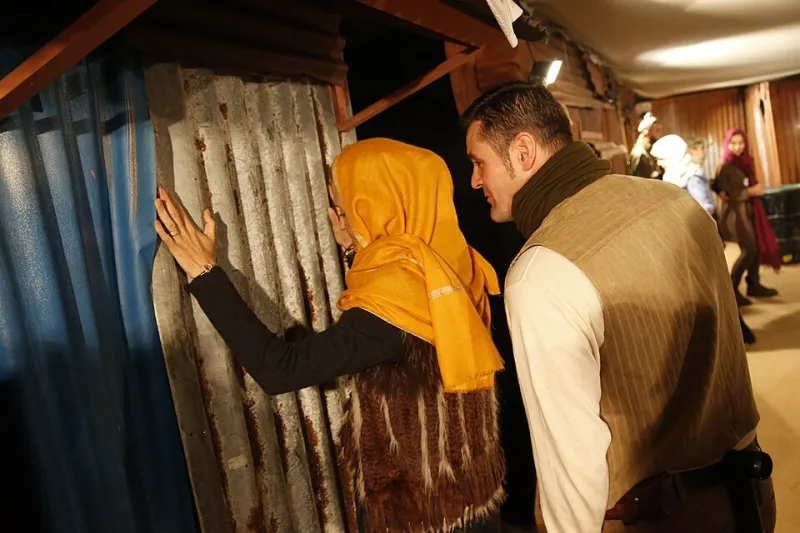
Photo: Crossroads Foundation Photos, CC BY 2.0, via Wikimedia Commons
I remember sitting across from someone who, by every conventional measure, was offering me exactly what I was supposed to want. The meeting had that particular energy — warm lighting, good coffee, the kind of careful enthusiasm that signals we've already decided you're the one. And I sat there, nodding at the right moments, saying things like "that's really interesting" and "I'd love to think about that," while some quieter, more honest part of me was already walking out the door.
I didn't take the deal. And for a while, I had a hard time explaining why — even to myself.
The Tyranny of the Logical Choice
Here's what nobody tells you about crossroads moments: the hardest ones aren't the obvious forks in the road. They're the ones where one path is so well-lit, so clearly marked with signs that say success and stability and this is what you've been working toward, that walking away from it feels almost irrational.
The opportunity I turned down had credentials. It had prestige. It had the kind of institutional backing that makes people in your life exhale with relief because it means you'll probably be okay financially. My mother would have loved it. My more cautious friends would have celebrated it. And honestly? A part of me wanted to want it — wanted to be the kind of person for whom that path felt like arriving.
But wanting to want something is not the same as actually wanting it. And I've learned, sometimes painfully, that confusing the two is how you end up living someone else's version of your life.
What Gut Instinct Actually Feels Like
People talk about trusting your gut like it's a clean, confident signal — like your intuition arrives wearing a name tag and speaking clearly. In my experience, it's messier than that. It feels more like a low-grade unease you can't quite source. A kind of flatness when you imagine yourself six months into a thing that should, by all accounts, excite you.
When I tried to picture myself inside that opportunity — doing the work, inhabiting the role, becoming the version of myself that path implied — I felt... muted. Like someone had turned the saturation down on my own imagination. And I've come to recognize that feeling as data. Not weakness, not ingratitude, not fear of success. Data.
The version of me that would have thrived in that situation was a slightly different person than I actually am. And I wasn't willing to do the slow, quiet shrinking that would've been required to fit.
The Conversation That Cracked Something Open
A few days after that meeting, I talked to an older musician I've long admired — someone who'd navigated her own version of these crossroads decades before me. I wasn't looking for permission exactly. Maybe I was looking for company in my doubt.
She said something I've turned over in my mind ever since: The opportunities that are hardest to say no to are usually the ones most worth refusing. Because those are the ones that come wrapped in enough legitimacy to silence your instincts. The ones that make you feel like you'd be crazy to walk away. And that pressure — that social and financial and ego-driven pressure — is precisely what makes them dangerous.
She wasn't saying never take the safe bet. She was saying: know why you're taking it. Make sure the yes is actually yours.
What Saying No Made Room For
I won't pretend the aftermath was clean or triumphant. There was a stretch of time after I turned down that opportunity where I genuinely wondered if I'd made a mistake. The absence of the thing you chose not to have can feel, in the short term, a lot like loss.
But here's what I know now: the no created space. Not immediately — space doesn't rush. But over the months that followed, I found myself making choices that felt increasingly like me. Smaller projects that lit me up in ways the bigger, shinier thing never would have. Collaborations that came from genuine curiosity rather than strategic positioning. Songs that I wrote because I needed to write them, not because they fit a narrative someone else had outlined.
My artistic identity — the thing that makes my work feel like mine rather than a competent approximation of what the market wants — got sharper. And I think that's directly connected to the practice of protecting it, even when protection looks a lot like turning down something impressive.
Recognizing Your Own Crossroads
If you're in the middle of one of these moments right now, here's what I'd offer — not as advice exactly, but as something I've found useful:
Pay attention to the stories you're telling yourself about why you should say yes. If those stories are mostly about what other people will think, or about credentials and optics and finally having something to point to — that's worth sitting with. A yes that's mostly about external validation tends to hollow out over time.
Ask yourself what version of you the opportunity is actually calling for. Is that the version you're trying to become, or the version you're trying to move away from?
And notice the flatness. That low-saturation feeling when you imagine yourself inside a future that looks good but doesn't feel true. That's not nothing. That's your creative self trying to protect something it knows you'll need later.
The Permission You Don't Need (But Maybe Want)
I'm not here to tell you to blow up your life or walk away from security for the sake of some romantic notion of artistic purity. Life is complicated. Bills are real. Timing matters.
But I do think there's something worth honoring in the quieter voice — the one that doesn't make arguments, doesn't cite credentials, doesn't know how to win a debate. The one that just knows. The one that says this isn't your path with a calm certainty that's easy to override and hard to forget.
The conversation that changed everything for me wasn't dramatic. It didn't happen in a moment of crisis or revelation. It happened over bad diner coffee with someone who'd walked her own unconventional road long enough to know what the detours were actually worth.
What she gave me wasn't a roadmap. It was permission to trust the map I already had — the one written in instinct and accumulated self-knowledge and all the things I'd learned about who I actually am when I'm doing work that matters.
Saying no to the logical choice was the most illogical-looking thing I've done. It was also, without question, the decision I'm most grateful for.
Some yeses only become visible after the no that made room for them.