The People Who Found You Before the Spotlight Did

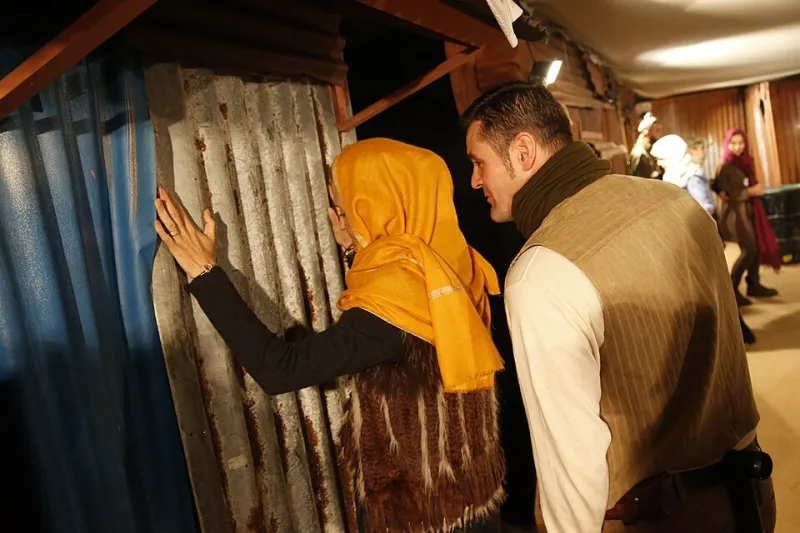
Photo: small intimate music venue audience performer folk singer, via happydoggut.com
There's a coffee shop I used to play in Northampton back when my name meant absolutely nothing to anyone outside a very small, very specific circle of people. I'm talking maybe thirty seats, half of them occupied by regulars who came for the coffee and tolerated the music. Tips in a mason jar. Applause that was polite at best.
I remember thinking those nights were a kind of failure. A proving ground I hadn't yet passed. I'd look out at those scattered faces and feel the gap between where I was and where I imagined I needed to be.
Here's what I didn't understand then: those people were a gift I hadn't learned to unwrap yet.
What Obscurity Actually Builds
When you're not famous — when you're just a person making things and quietly putting them in front of whoever will look — something interesting happens. The people who find you, find you for real. They're not following a trending hashtag. They're not clicking because someone else clicked first. They're there because something you made reached them in a way that felt personal.
That's not a small thing. That's actually the whole thing.
The relationships you build during low-visibility years have a different texture than the ones formed at the peak of whatever wave you eventually ride. They're slower, more conversational. Someone comes up after a show not to take a photo but to say, that one line in that one song — I've been thinking about it for weeks. And you actually have time to ask them why. You learn something about your own work from that exchange. You learn something about them.
Those conversations don't happen the same way when there's a line of two hundred people waiting behind them.
The Math Nobody Talks About
Here's a thing the music industry — and honestly the whole content-creator economy — gets backwards: it treats audience size as the primary measure of an audience's value. More followers, more streams, more reach. The assumption is that bigger is better, and that the people you accumulate at your peak represent your real foundation.
But think about what actually holds. Think about the artists you know who had one massive moment and then watched the whole thing evaporate. Compare them to the ones who built slowly, steadily, through years of modest venues and word-of-mouth and genuine community. The second group tends to still be working. Still be supported. Still have people showing up.
The difference isn't talent. It's often the quality of the roots they grew before anyone was paying attention.
A thousand people who found you during the quiet years, who've been with you through the changes and the experiments and the work that didn't land — that thousand is worth more than ten thousand who discovered you because an algorithm served you up one afternoon and then moved on to the next thing by Tuesday.
When You Stop Performing for Approval
There's another thing that happens in the obscure years that's harder to quantify. When no one particularly cares whether you succeed or fail, you stop performing for approval and start making things because you actually need to make them. The work gets stranger. More specific. More you.
And paradoxically, that's often when you start attracting the people who will love you most fiercely. Because they're not responding to a polished, market-tested version of you. They're responding to something raw and real that they maybe couldn't find anywhere else.
I think about the songs I wrote when I was broke and uncertain and not sure any of it was going anywhere. Some of those are the ones people still come up to me about. Not the ones I crafted with an eye toward what might connect. The ones where I just needed to say the thing and didn't have enough of an audience yet to be self-conscious about it.
The Loyalty That Outlasts the Hype
Here's what I've watched happen to artists who built their audiences the other way — who got big fast, who accumulated followers at the height of their visibility without that prior foundation of genuine relationship. When the moment passed (and it always passes), they found themselves standing in front of a crowd that had loved the idea of them more than the actual work. When the work changed — as it must, as it should — those audiences didn't follow.
But the people who found you when you were nobody? They already know how to follow you through change. They've been doing it since before change was even a consideration. They watched you figure it out in real time. They're not attached to a fixed image of you because they saw you before any fixed image existed.
That's a remarkably durable thing.
Reframing What You Think You Wasted
If you're in the middle of what feels like your unsuccessful years right now — if you're playing small rooms, posting to an audience that could fit in a minivan, wondering when it's all going to add up to something — I want to offer you a different frame.
You're not waiting for your real life to start. You're in it. And the people showing up for you right now, in this low-stakes, no-pressure, nobody's-watching moment? They might be the most important relationships your creative life will ever produce.
Invest in them. Actually talk to them. Learn their names if you can. Remember what they told you about why your work matters to them. Not because it's a networking strategy, but because it's true connection — the kind that's genuinely rare and genuinely sustaining.
The audience you build in private isn't a consolation prize. It's the foundation that makes everything else possible.
And someday, if the spotlight does find you — and I hope it does, in whatever form fits your particular life — you'll be glad you didn't wait for it to start building something real.