Four Walls and a Feeling: How the Spaces We Create In Shape Everything We Make

There's a particular quality of light that comes through a basement window in late afternoon — low, dusty, almost apologetic. If you've ever made something important in a basement, you know exactly what I mean. That light has a sound. It has a mood. And whether you were aware of it or not, it showed up in the work.
We talk endlessly about creative process — the habits, the rituals, the gear, the collaborators. But we almost never talk about the room itself. The actual physical container where the ideas first took shape. And I think that's a mistake, because the space you're in when you create isn't neutral. It never was.
The Room Remembers Even When You Don't
Think about the first place you made something you were genuinely proud of. Not the polished version, not the version you eventually released or performed or handed over — the first raw draft of it. Where were you?
For a lot of musicians I know, the answer involves somewhere small and slightly embarrassing. A childhood bedroom with band posters held up by too much tape. A practice space above a dry cleaner that smelled like chemicals and ambition. A kitchen table at 2 a.m. while a roommate slept ten feet away. These aren't glamorous origin stories, but they're honest ones.
What those spaces share is intimacy. They're places where nobody was watching, where the stakes felt low enough to actually try something weird. The smallness wasn't a limitation — it was a permission slip.
I've had the conversation with enough working musicians to notice a pattern: the spaces that produced their most honest work were rarely the most impressive ones. One songwriter I know still talks about a borrowed studio in somebody's converted garage in New Jersey — egg cartons on the walls, a single space heater that clicked and groaned all night — as the place where she finally figured out what she actually wanted to say. She's recorded in far more expensive rooms since then. She's never quite recaptured that feeling.
What Luxury Costs You
Here's a thing nobody warns you about: when the spaces get better, the work doesn't automatically follow.
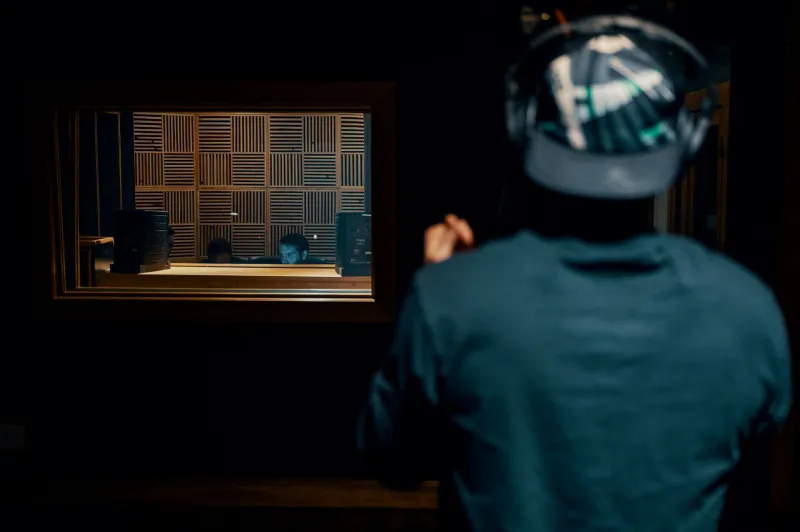
There's something about a high-end studio — all that pristine acoustic treatment, all those vintage outboard pieces behind glass, the engineer who looks slightly pained when you ask a basic question — that can quietly strangle the experimental impulse. You start second-guessing takes that would have felt totally valid in your bedroom. You start performing instead of playing. The room is too good for your mess, and so you clean up the mess, and sometimes the mess was the whole point.
This isn't a knock on professional studios. They're extraordinary tools and the people who run them are often genuinely brilliant. But tools shape behavior. A beautiful kitchen makes you want to cook beautiful food, not throw random ingredients together and see what happens. Sometimes the random-ingredient approach is exactly what the work needs.
Tour buses are their own strange creative ecosystem — cramped, loud, always moving, weirdly disconnected from normal time. I've talked to artists who swear they wrote their best material in transit, on a bunk with headphones and a laptop, the highway noise bleeding under everything. The instability became generative. The discomfort kept them awake to something.
The Grief of Leaving a Place That Made You
What happens when you lose the room?
Sometimes it's practical — the lease ends, the band breaks up, the building gets sold. Sometimes it's a choice you make on the way up, trading the old space for something more appropriate to your new level. Either way, there's often a grief attached to it that people don't give themselves permission to feel.
A producer I know lost access to the studio he'd been using for nearly a decade when the owner decided to convert the building to condos. He described it to me as losing a collaborator. Not a space — a collaborator. The room had its own sonic character, its own quirks, and he'd learned to work with those quirks so completely that they'd become part of his sound. Starting over in a new space wasn't just logistically inconvenient. It was artistically disorienting in a way that took him over a year to work through.
We don't really have language for this kind of loss. It doesn't fit neatly into anything we're supposed to mourn. But it's real, and it matters.
Building a Space That Serves the Work
So what do you do with all of this? If you're lucky enough to have some control over where you create, it's worth thinking about what the space is actually doing to you — not just for you.
A few things worth considering:
Familiarity breeds comfort, and comfort breeds honesty. The more at home you feel in a space, the more likely you are to take genuine risks. This is why so many artists do early development work at home before taking anything into a studio. Home is where you're allowed to be bad.
The energy of a space is cumulative. A room where you've made good work before carries that history. This is partly psychological — you walk in and your brain knows what mode you're in — but it's also something harder to name. The room holds a kind of residue of the work that happened there. Use that.
Constraints are creative. The bedroom with one microphone, the basement with bad acoustics, the tour bus with no quiet — these limitations force decisions. They make you choose. And choosing, it turns out, is most of what creativity actually is.
Know when to leave. Some spaces stop serving you. They get too comfortable, or they carry associations that have started to feel like a ceiling. Recognizing when it's time to find a new room is its own creative skill.
The Room You're In Right Now
I've been thinking lately about the spaces that shaped my own work — the rooms I made things in when I was just figuring out what I was doing, when nobody was paying attention and I had nothing to protect. There's a tenderness I feel toward those places, even the uncomfortable ones. Especially the uncomfortable ones.
Wherever you're making your work right now — whatever four walls are holding you while you figure it out — pay attention to them. Notice what they're asking of you. Notice what they're giving you that you haven't thought to name.
The room is part of the song. It always has been.