When the Crowd Goes Wild for the Wrong Song: Reckoning With Success That Doesn't Quite Fit
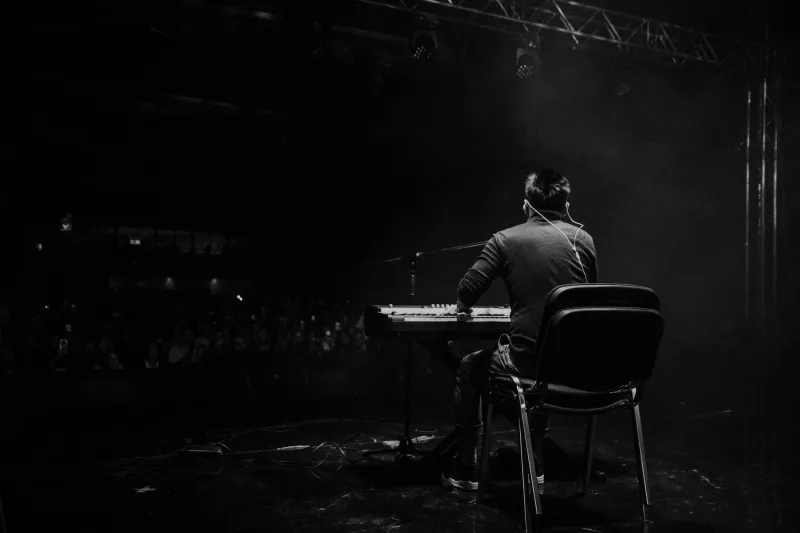
There's a moment — and if you've been making things long enough, you probably know exactly what I'm talking about — where you're standing on the receiving end of genuine applause, genuine praise, genuine love from people who mean it, and something in your chest just... doesn't match the room.
Not because you're ungrateful. Not because you're being precious about your art. But because somewhere in the back of your mind, a quiet, honest voice is whispering: this isn't the real one.
The real one is still sitting in a drawer. Or it got cut from the album because someone said it was "too much." Or you softened it yourself before anyone even had the chance to tell you to.
The Edit You Made Before Anyone Asked
Here's the part that's hardest to admit: a lot of the time, nobody forced you to sand down the edges. You did it yourself. Preemptively. Because you'd already run the math in your head — what people tend to respond to, what feels safe enough to share, what version of yourself is easier to love.
And it worked. That's the uncomfortable part. The filtered version worked.
The song that made it onto the record instead of the one that scared you — people loved it. The essay that left out the really messy, embarrassing truth — it got shared everywhere. The performance where you held back just a little bit — that's the one that got written up.
And now you're supposed to feel good about it. And you do, sort of. But not entirely.
There's a reason artists like Alanis Morissette have talked openly about the gap between commercial success and personal truth. Jagged Little Pill was raw and furious and it blew up — but she's also been candid over the years about the ways the music industry tried to reshape her before and after that moment, and the internal cost of navigating what audiences want versus what you actually need to say. The tension doesn't disappear just because the record sells.
What "Safe" Actually Looks Like in Practice
Safe doesn't always look like selling out. That's the sneaky part. Sometimes safe looks like:
- Choosing the more melodic arrangement because you weren't sure anyone would sit with the stranger one
- Leaving out the verse about your family because you didn't want to have that conversation
- Writing around the political thing you actually believe instead of through it
- Making the ending hopeful when the honest ending was ambiguous
None of those choices are cowardly, exactly. They're human. They're the result of being a person who wants to connect with other people, and connection requires some translation. You can't just dump the raw feed of your interior life onto an audience and call it art.
But there's a difference between thoughtful translation and strategic omission. And most of us, if we're being honest, know which one we were doing when we made the call.
The Audience You Trained
Here's where it gets complicated. When your safer work is your most successful work, you've done something unintentional: you've trained an audience to expect that version of you.
They fell in love with the polished edge. They built a relationship with the you that left out the weird part. And now, if you want to bring the stranger, more vulnerable, more controversial material — the stuff that actually keeps you up at night — you're not just making a creative choice. You're renegotiating a relationship.
David Bowie spent his entire career doing exactly this, which is part of why he remains so fascinating. He kept blowing up the version of himself people had just gotten comfortable with. It cost him audiences, repeatedly. And he kept doing it anyway, because the alternative — staying inside the box that success had built — was clearly, visibly unbearable to him.
Most of us aren't Bowie. Most of us feel the pull of the audience's expectations like a gentle, persistent gravity. It's not malicious. It's just there.
The Internal Reckoning
At some point — and this is the conversation I think a lot of creative people are having privately but not out loud — you have to sit with the question: what was that success actually for?
If the goal was connection, did you connect? Genuinely? Or did you connect with people who love a version of you that you're not sure you can keep being?
If the goal was to say something true, did you say it? Or did you say something true-adjacent, something that gestured toward the real thing without fully committing to it?
I don't think there's a clean answer. Some of the most meaningful work I've encountered in my life was work that was also, in some ways, a compromise. The artist found a way to smuggle in the truth inside something more palatable. That's a legitimate strategy. Sometimes the Trojan horse is the only way in.
But there's a version of that reasoning that becomes a long-term excuse. I'll say the real thing once I've built enough of an audience. I'll take the risk once I've established enough trust. And then the audience grows, and the stakes feel higher, and the real thing keeps getting pushed back.
What to Do With the Discomfort
I'm not here to tell you to blow up your career in the name of authenticity. That's not practical and, frankly, it's not always the point.
But I do think the discomfort — that quiet mismatch between the applause and your gut — is worth paying attention to instead of explaining away.
Maybe it's telling you that the next thing needs to be braver. Maybe it's telling you that there's a project, a song, a piece of writing that you've been postponing because it feels too exposed, and it's time to stop postponing it. Maybe it's just telling you to be honest with yourself about what you traded and why, so you can make a more conscious choice next time.
Success that doesn't quite fit isn't a failure. But it is information.
The crowd going wild for the wrong song doesn't mean you have to keep playing the wrong song forever. It just means you know something now that you didn't know before — about what you're capable of, about what you've been holding back, and about what it might feel like to finally let it out.
That's not nothing. That's actually the beginning of something.