Hearing Yourself for the First Time, Again: The Strange Gift of Old Work
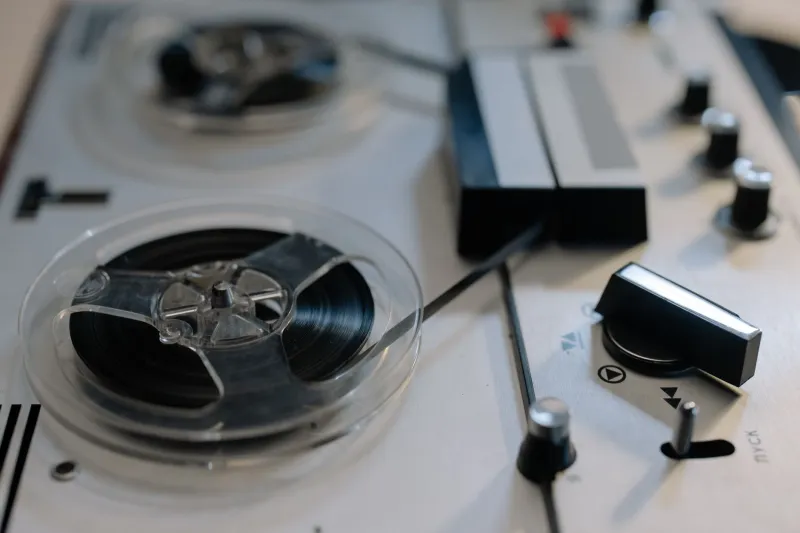
Somewhere in a box, or a hard drive, or a dusty folder on a laptop you barely open anymore, there's a version of you that was figuring things out. Writing songs before you knew what kind of songwriter you were. Recording demos in rooms that smelled like old carpet and cheap coffee. Scribbling lyrics on napkins that you folded up and forgot about for the better part of a decade.
And then one day — maybe you're moving, maybe you're bored, maybe a friend asks about something you made back then — you find it. You press play. And something unexpected happens.
It hits you differently than you thought it would.
The Work That Didn't Know What It Was
There's a particular quality to creative work made before self-consciousness fully sets in. Before you started thinking about how it would land, who would hear it, whether it fit the genre, whether it was you in the way you'd come to define yourself. Early work has a rawness that's hard to manufacture later, because you can't unknow what you know. You can't un-develop your instincts.
But here's the thing about instincts: they evolve. And sometimes the gap between who you were and who you've become is exactly what gives old work its new power.
I've talked to so many artists — musicians, writers, performers — who describe the same experience. They go back to something they made when they were younger, or less experienced, or just plain different, and they don't cringe the way they expected to. Instead, they hear something they didn't know they were saying at the time. A thread of truth that was running through the whole thing, quietly, waiting for them to be old enough to recognize it.
That's not nostalgia. That's archaeology.
Why Time Is the Best Producer You'll Ever Work With
When you're in the middle of making something, you're too close to it. You're making a thousand tiny decisions — this chord, that word, this melody — and each one feels enormous in the moment. You're worried about whether it's good, whether it's done, whether it's right. That anxiety is part of the process, but it also clouds the view.
Time clears the air.
Come back to the same piece five years later and you're no longer inside it. You're a listener now, almost as much as any stranger would be. You can hear the shape of the whole thing without getting tangled up in the details. And sometimes that shape is more interesting, more honest, more you than anything you've made since.
That's because the person who made that old recording wasn't trying to be you — they just were you, unfiltered. No brand to protect. No reputation to maintain. No audience expectations to manage. Just someone in a room, making something because they needed to.
There's a freedom in that kind of making that's genuinely hard to recapture. But you can honor it. You can learn from it. You can even use it.
The Remix Isn't Betrayal — It's Conversation
Some artists go back to old work and rework it. New arrangements, new production, new context. And there's a school of thought that says this is somehow cheating — that you should leave the past alone, let it exist in its original form, move forward and make new things.
I don't buy that.
Revisiting your old work isn't about fixing it. It's about having a conversation with the person who made it. You bring what you know now; they bring what they felt then. The result is something that couldn't exist any other way — a collaboration across time, with yourself.
Think about how many artists have done exactly this and produced some of their most resonant work. A musician re-records an album from their early career with the technique they've since developed, and suddenly the emotional core of those songs — which was always there — can finally breathe. A songwriter revisits a half-finished lyric from twenty years ago and finds that it was waiting for them to live enough to finish it.
The old work wasn't wrong. It was incomplete. And you're the only one who can complete it.
What the Old Recordings Actually Tell You
If you're willing to sit with your past work without immediately judging it, it'll tell you things. About what you were drawn to before you had a strategy. About the themes that kept surfacing even when you weren't consciously choosing them. About the kind of artist you were always going to be, even when you were still figuring out the shape of it.
This is especially true for musicians. A live recording from ten, fifteen years ago — even a rough one, even a bad one — captures something that studio polish can't. It captures the way you moved through a song when it was still new to you. The hesitations. The moments of confidence. The places where you leaned in hard because you meant it.
That's data. Not the kind you put in a spreadsheet, but the kind that tells you who you actually are.
And here's the uncomfortable, useful truth: sometimes your old work is better than what you've made recently. Not technically — you're a better technician now, almost certainly. But emotionally, intuitively, in terms of pure unguarded honesty? Sometimes the version of you that didn't know what they were doing was closer to the truth than the version that does.
Giving Yourself Permission to Go Back
There's a cultural pressure in creative life to always be moving forward. New work, new projects, new evolution. Looking backward gets coded as being stuck, or self-indulgent, or afraid of the present.
But that framing misses something important. Going back to your old work isn't retreating — it's research. It's context. It's understanding the full arc of what you've been making and why.
So if there's a box you've been avoiding, a folder you haven't opened, a recording you made that you've half-convinced yourself isn't worth revisiting — maybe it's time. Not to judge it. Not to cringe or celebrate or compare it to where you are now.
Just to listen.
You might be surprised by who shows up. And you might find that the person you were back then had something to say that you're finally ready to hear.