After the Breakthrough: The Impossible, Necessary Art of Making Your Second Thing
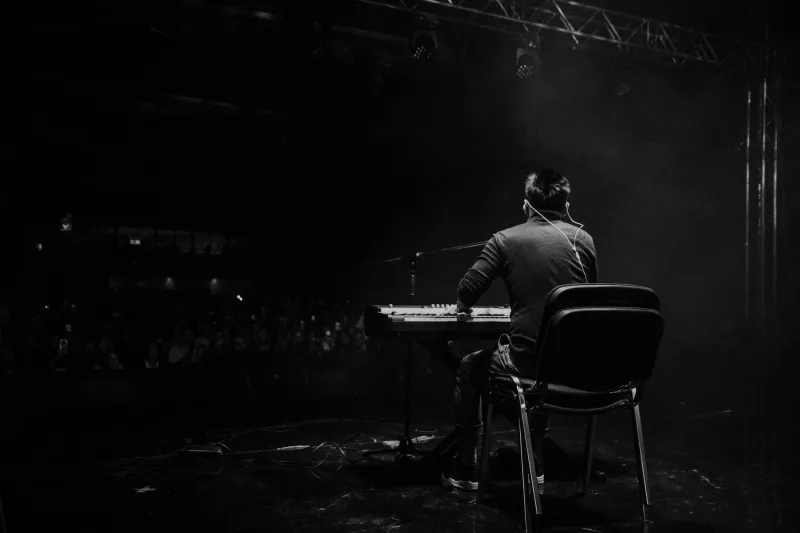
Somewhere right now, there is an artist sitting in front of a blank page — or a blank session, or an empty canvas — and they are completely paralyzed. Not because they have nothing to say. Because they had something to say, and they said it, and it worked, and now the whole world is watching to see what comes next.
This is the second album problem. And it is not actually about albums.
It's about what happens to creative instinct when success enters the equation. It's about the moment the work stops being private and becomes a negotiation — between who you were when you made the first thing, who you want to be now, and who everyone else has decided you are. It's one of the most psychologically complex creative situations there is, and we treat it like a PR question when it's actually a survival question.
Lightning in a Bottle Is a Terrible Metaphor
The phrase "lightning in a bottle" implies that what made your first breakthrough work was essentially accidental — a freak occurrence that you happened to be holding a container for. And look, sometimes that's true. Sometimes a song or a project catches fire for reasons that have almost nothing to do with what you intended, and you're as surprised as anyone.
But more often, the first thing that worked wasn't an accident. It was years of development that finally found its form. It was the right idea at the right moment, made by someone who had been quietly getting ready for a long time. The breakthrough felt sudden from the outside because breakthroughs always do. From the inside, it was the result of a thousand decisions, most of them invisible.
The problem with the lightning-in-a-bottle framing is that it sets up an impossible task for the follow-up: recreate a miracle. And you can't recreate a miracle. You can only make the next honest thing.
The Seduction of Repetition
Let's be real about the temptation to just do it again.
If the first record had a particular sound — a specific tempo, a lyrical approach, a production aesthetic — there is enormous pressure, both internal and external, to return to those coordinates. Labels push for it. Fans ask for it. And honestly? Part of you wants it too, because at least you know that worked. Going back to the well feels safe in a way that going somewhere new absolutely does not.
The artists who give in to this completely rarely survive the third record. They become a parody of themselves by degrees — each successive project a slightly thinner copy of the original, until even the most devoted fans start to feel the diminishing returns. You can hear it happening in real time on some discographies: the second record is the first record with less conviction, and the third is the second with even less, and by the fourth everyone has quietly moved on.
But here's the equally real trap on the other side: the overcorrection. The artist who is so determined not to repeat themselves that they swing wildly in the opposite direction — alienating the audience that found them, making something deliberately difficult or inaccessible as a kind of defensive maneuver. This can be artistically valid. It can also be fear wearing the costume of boldness.
What's Actually Happening Psychologically
I've talked to enough musicians who've been through this to recognize a consistent emotional pattern, and it goes something like this:
First, there's euphoria — the high of the breakthrough, the validation, the sense that all the years of work finally paid off. That lasts a while, and it's genuinely wonderful.
Then comes the quiet dread. The awareness that you now have to follow this. That every choice you make on the next project will be compared to the last one. That you have inherited an audience with expectations, and those expectations are a kind of cage.
Then comes the identity crisis. Because the work that broke through was made by a version of you that no longer exists. You've changed — grown, shifted, accumulated new experiences and influences. The person who made the first thing is not the person sitting down to make the second thing. And yet everyone wants the first person back.
This is where a lot of artists stall out. Not because they lack ideas, but because they can't figure out how to honor who they've become without abandoning who they were.
The Quiet Rebellion of Making Something Different
Some of the most interesting second records in American music history are the ones that refused to be sequels. They didn't ignore what came before — you can always hear the lineage — but they refused to be held hostage by it.
Think about the artists you admire most. The ones with real longevity. Almost universally, they made a follow-up that surprised people, that maybe disappointed some fans in the short term, that took a genuine risk. And almost universally, that willingness to move — even awkwardly, even imperfectly — is what kept them alive as artists for decades rather than years.
The quiet rebellion of making something different isn't about being contrarian. It's about trusting that the audience who found you for genuine reasons will follow a genuine evolution. Not all of them. Some will fall away, and that's real and it hurts. But the ones who stay for the right reasons will stay longer, and the work will be better for it.
Some Practical Honesty
If you're in this position right now — staring down a follow-up to something that actually landed — here's what I'd offer:
Give yourself permission to make it badly first. The paralysis usually comes from trying to make the final version before you've made the draft version. Make the bad version. Make the confused version. Make the version that's too much like the last thing and the version that's too far from it. You need to move through those to find the real thing.
Separate the audience's timeline from your own. They experienced your first work in a compressed window — maybe they found it six months after it came out, listened to it for three months straight, and now they're ready for more. You've been living with it for years. Your creative clock is running on a completely different schedule than theirs. That's okay.
Name what you're afraid of. The fear that the second thing won't measure up is almost always sitting right on top of a deeper fear — that the first thing was all you had, that the breakthrough was a fluke, that you don't actually have more to say. Naming that fear doesn't make it true. But leaving it unnamed lets it run everything.
The second thing doesn't have to be better. It has to be next. Better is a comparison. Next is a direction. Focus on the direction.
The Work Is Still Yours
Here's what I keep coming back to, for myself and for anyone else navigating this: the breakthrough belonged to you and the audience equally. But the follow-up — that one is yours. You're the one who has to make it, live with it, stand behind it.
Make it for the person you are now, not the person who made the last thing. That person already did their job. It's your turn.