What You Can't See From Here Is Probably the Point
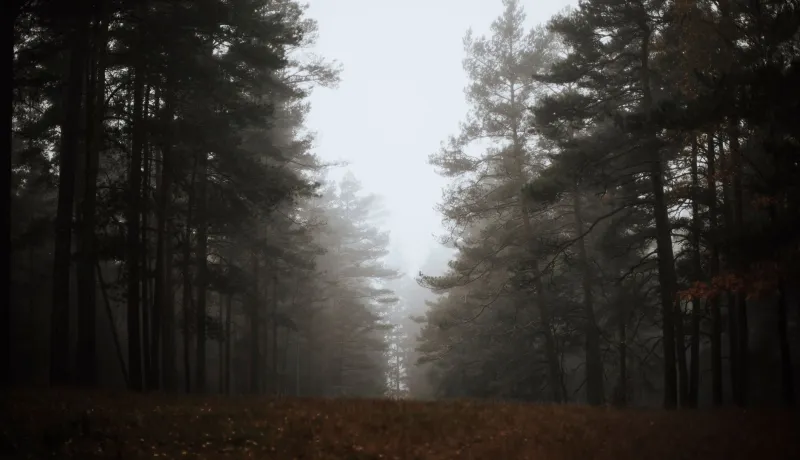
I used to think the goal was clarity. A clean plan. Knowing the next three moves before I made the first one. I'd watch other artists talk about their "vision" in interviews — the five-year arc, the thematic throughline, the carefully constructed evolution — and I'd feel this low-grade shame, like I was doing something wrong by not having that kind of map.
Then I started paying attention to the work I was actually proud of. Almost none of it came from a plan.
The Myth of the Deliberate Masterpiece
We love a tidy origin story. The artist who knew exactly what they were making, who saw the whole thing in a flash of inspiration and then executed it flawlessly. It's a great narrative. It's also almost never true.
Most of the work that moves people — really moves them, not just impresses them — came from someone stumbling forward in the dark and trusting that the ground would be there when they put their foot down. Dylan didn't know Blood on the Tracks was going to become a generational document of heartbreak. Joni Mitchell wasn't mapping out her cultural legacy when she wrote Blue. They were following something they couldn't fully name yet.
That's not an accident. That's the thing itself.
When you know exactly where you're going, you stop noticing what's beside the road. You're too focused on the destination to catch the detail that would have made the whole trip worth taking. Predictability in art isn't just boring — it's a kind of creative death that happens so gradually you don't notice until you're already gone.
The Difference Between Lost and Open
Here's where it gets tricky, because I'm not making an argument for paralysis. There's a version of "not knowing" that's actually just fear wearing a philosophical disguise. You're not embracing mystery — you're avoiding the discomfort of starting. That's a different animal entirely.
Productive uncertainty has a particular texture to it. It feels alive. There's an edge, yes, but also a kind of electrical hum underneath it — the sense that something could happen, that you're genuinely in motion even if you can't see the destination. You're asking real questions and actually listening for answers, even if those answers don't arrive on schedule.
Paralyzing doubt, on the other hand, feels like standing in a room where all the air has been slowly removed. Nothing moves. The questions loop back on themselves. You're not open — you're stuck.
The practice, the real practice, is learning to tell the difference in your own body. For me, productive uncertainty makes me want to pick up an instrument. Paralyzing doubt makes me want to reorganize my kitchen.
Why Some Artists Do Their Best Work in the Fog
I've talked to enough musicians and writers over the years to notice a pattern: the work that surprises an audience almost always surprised the person who made it first.
There's something about not knowing the outcome that keeps your ego out of the room. When you're certain about where you're headed, your ego shows up early and starts making decisions. It starts editing before you've even written the first draft. It worries about how this will land, what people will think, whether it fits the brand you've accidentally built for yourself.
But when you genuinely don't know? The ego has nothing to grab onto. It gets confused and wanders off. And in that space — that weird, uncomfortable, slightly vertiginous space — something more honest tends to show up.
I've written songs I didn't understand until years later. At the time, I just knew I had to finish them. The meaning caught up eventually. And I think that's actually how it's supposed to work. You're not always the first to understand what you've made. Sometimes you're just the vessel, and the understanding comes later — for you and for whoever's listening.
The Audience You Can't Predict Is Often the One That Matters Most
This extends beyond the work itself into who receives it. When you're making something without a clear destination, you also can't fully predict who it's going to find. And that's terrifying if you've spent any time trying to build an audience in the algorithmic sense — targeting demographics, optimizing for engagement, figuring out exactly who your people are.
But here's what I've noticed: the listeners who've meant the most to me over the years weren't the ones I was aiming for. They were the ones who wandered in from somewhere unexpected and found something in the work that I didn't even know was there.
You can't manufacture that. You can't engineer that kind of connection. It only happens when the work itself is genuinely open — when you made something that you didn't fully understand, and it went out into the world with that openness still intact, and someone else's unresolved thing met your unresolved thing in the middle.
That's not a strategy. That's a miracle. And it requires you to not know what you're doing, at least a little.
Learning to Sit With It
None of this means the not-knowing is comfortable. I want to be honest about that. There are stretches — sometimes long ones — where the fog feels less like creative freedom and more like genuine lostness. Where you're not sure if you're between chapters or just... done. Where the silence isn't pregnant with possibility but just silent.
Those stretches are real. They're part of it. I don't think you get to skip them.
What I've learned, slowly and not always gracefully, is that sitting with uncertainty is itself a skill. It's not passive. It requires a kind of active patience — keeping your hands moving, staying curious, not forcing a resolution before one is actually ready to arrive. Making small things. Following weird tangents. Trusting that the work knows something you don't yet.
Some of the most alive creative periods of my life have started not with a clear vision but with a question I couldn't answer. A feeling I couldn't name. A song fragment that didn't make sense. The clarity came later — or sometimes it never came, and the work was better for it.
The Most Honest Creative Act
If there's a through-line here, it's this: not knowing what comes next isn't a problem to be solved. It's evidence that you're actually in it. The artists who always know exactly what they're making have usually stopped listening to something — to themselves, to the work, to the world around them.
The mystery isn't a gap in your process. It might be the whole process.
So if you're standing at the edge of something right now and you can't see the other side — if you don't know what the next song sounds like or what the next chapter looks like or who you're even making things for anymore — I'd gently suggest that you're probably in exactly the right place.
You just can't see it from here yet. That's not a failure. That's the work.