The Ideas That Wait: On Slow Work and the Wisdom of Not-Yet

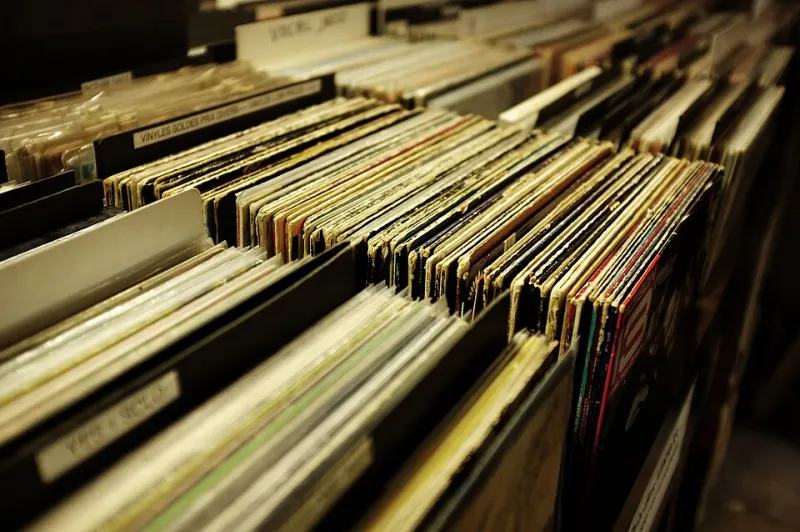
Photo: Kristin Hardwick, CC0, via Wikimedia Commons
I've got a notebook — well, several notebooks, honestly — full of ideas I haven't touched yet. Some of them have been sitting there for years. There's a story I first sketched out in 2019 that I still haven't written. A song concept that comes back to me every few months, a little more formed each time, not quite ready to be pulled all the way into the light.
For a long time, I thought that was a character flaw. The hustle culture machine is very good at making you feel like an unfinished idea is a personal failure. Ship it. Post it. Publish it. Move fast. The underlying message is always the same: if you haven't done it yet, you're behind.
But I've started to wonder if that's just... wrong.
There's a Difference Between Waiting and Hiding
Let me be straight with you, because I think this distinction matters enormously: not all delayed creative work is procrastination. Some of it is procrastination dressed up in philosophical language, sure. But some of it is something else entirely — something more like composting.
Composting is a good word for it. You throw things in — experiences, images, overheard conversations, half-formed feelings — and you leave them alone. They break down. They transform. And eventually, something rich and usable comes out the other side.
The question isn't whether your idea has been sitting a while. The question is whether it's been working while it sits.
There's a difference between an idea you avoid because it scares you and an idea you're living alongside, turning over in your mind, letting inform how you see the world. One of those is procrastination. The other is preparation.
When Slow Is Actually Smart
Harper Lee wrote To Kill a Mockingbird over a period of about two and a half years, with enormous revision and struggle. The first draft was reportedly a mess. What emerged was one of the most enduring American novels of the twentieth century — not because she rushed it, but because she didn't.
Closer to the music world: there are countless albums that took years longer than anyone expected and came out as absolute masterpieces. Lauryn Hill's The Miseducation of Lauryn Hill. D'Angelo's Voodoo. These weren't delayed because the artists were lazy or afraid. They were delayed because the work wasn't done yet, and the artists knew it.
There's a real cost to releasing something before it's ready. Not just commercially or critically — personally. You can feel it when you've put something out too soon. It sits wrong. It doesn't quite represent what you were reaching for. And then you're stuck defending a version of the work that wasn't actually the work.
Slowing down can be a creative strategy, not a creative failure.
How to Tell the Difference (Honestly)
Okay, but here's where I'm going to stop being gentle with you — and with myself — for a minute.
Sometimes we let ideas marinate because they need it. And sometimes we let ideas marinate because finishing them means they can be judged, and we'd rather keep them perfect and private than imperfect and real.
So how do you actually know which one is happening?
Ask yourself: has this idea changed in the last six months? If you revisit it and it looks exactly the same as it did a year ago — same shape, same problems, same unresolved questions — that's a sign you might be avoiding it rather than letting it grow. Genuine marination produces change. Ideas that are working on themselves in the background come back to you a little different each time.
Notice whether thinking about it feels alive or deadening. A ready idea has a kind of energy to it. When you sit down with it, something sparks. An idea you're hiding from tends to produce a specific kind of dread — not the productive anxiety of this is hard and I don't know if I can do it, but the flat dread of I don't want to go near this.
Try a small experiment. You don't have to finish the whole thing to test whether it's ready. Write one scene. Record one rough demo. Sketch one section. If the work comes out with any kind of life in it, the idea is probably ready to be made. If it feels like pulling teeth, maybe it genuinely needs more time — or maybe you just need to push through the hard part.
The Permission Slip You Didn't Know You Needed
Here's what I want to say clearly, because I think a lot of creative people need to hear it: you are allowed to take your time.
You are allowed to carry an idea for years before it becomes a thing. You are allowed to let a song sit half-finished in your Notes app while you figure out what it's actually about. You are allowed to write the first chapter of something and then put it in a drawer for eighteen months while life teaches you what the rest of the story is supposed to be.
This isn't laziness. This isn't falling behind. This is trusting the process in a culture that doesn't reward that kind of trust.
The hustle narrative wants you to believe that speed equals seriousness — that if you're not producing constantly, visibly, measurably, you're not a real artist. But that's a capitalist framework applied to something that fundamentally doesn't follow capitalist logic. Creativity doesn't run on quarterly schedules.
Carrying It Without Losing It
One last thing: if you're going to let ideas wait, you have to actually tend to them. Leave them completely alone and they might drift away. The goal isn't to ignore your slow-cooking ideas — it's to stay in relationship with them.
Keep a note. Come back to it every few months. Jot down anything that feels connected to it — a lyric you heard, a conversation you had, a feeling that seems to rhyme with what you're trying to make. You're not rushing it. You're keeping the thread.
When the idea is ready, you'll know. Not because a deadline told you, not because someone else said it was time — but because something in you will feel the rightness of it. The pieces will have arranged themselves. The work will be asking to be made.
That moment is worth waiting for.