Staying or Pivoting: How to Actually Tell the Difference

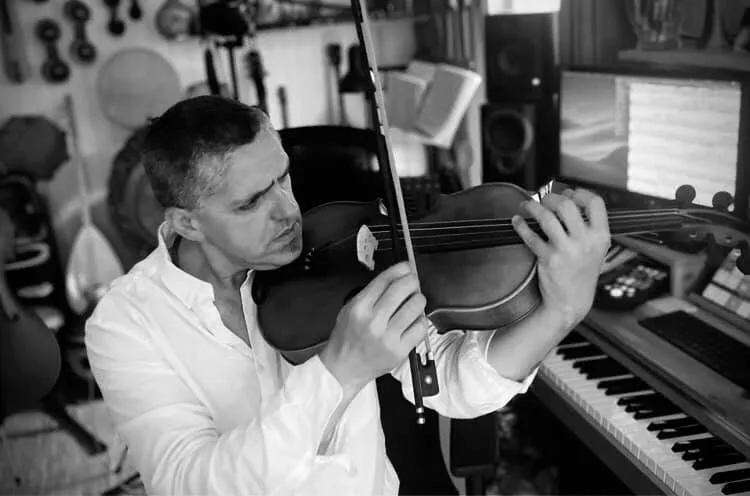
Photo: Stephen McKay , CC BY-SA 2.0, via Wikimedia Commons
Somewhere along the way, every artist I've ever admired has had to answer a version of the same hard question: Do I stay, or do I change?
It sounds simple. It is absolutely not simple.
I've watched talented people blow up everything they'd built chasing a trend that evaporated six months later. I've also watched equally talented people cling to a version of themselves that no longer fit, grinding away at something that had quietly stopped being true — all in the name of "staying authentic."
Both of those are real failure modes. And the tricky part is that from the outside, they can look almost identical: someone making a big move, uncertain about where they'll land.
So how do you actually tell the difference? How do you know when it's time to reinvent yourself — and when staying the course is the braver, smarter choice?
First: Understand What's Actually Driving the Urge
Before you change anything, you need to sit with the impulse for a minute. Not to talk yourself out of it — but to understand it.
There are roughly two kinds of creative restlessness. The first kind comes from expansion — you've grown, your perspective has shifted, you've developed new skills or interests, and the old container doesn't hold everything you are anymore. That kind of restlessness is healthy. It's your creative self asking for more room.
The second kind comes from avoidance — something in your current work isn't going the way you hoped, and reinvention feels like a way to outrun the discomfort. New direction, new audience, new story. A fresh start where no one knows what didn't work.
Expansion and avoidance can feel almost identical in the moment. The difference is usually underneath: expansion feels like yes, and — you're not leaving your core behind, you're building on it. Avoidance feels like escape — you're trying to get away from something rather than toward something.
Sit with that distinction. Be honest with yourself about which one is running the show.
The Signs That a Pivot Is Real
Some indicators are worth taking seriously when they show up:
Your current work bores you, not just occasionally, but consistently. Every creative practice has dry spells. That's not a signal to blow everything up. But if you've gone months — maybe longer — without feeling genuinely engaged by what you're making, that's worth paying attention to. Boredom at that scale is usually information.
You've been doing something new on the side that lights you up more than your main thing. This one sneaks up on people. You start experimenting, almost as a hobby, and you realize the experiment has more energy in it than your actual work. That asymmetry is a signal.
Your audience has changed and your work hasn't caught up. Sometimes the people who show up for you have shifted — they're looking for something your current form can't quite give them. That's not a failure. It's an invitation.
The voice you're using doesn't sound like you anymore. This is maybe the clearest sign. When you listen back to your work — your music, your writing, your performances — and it sounds like a version of you that no longer exists, it might be time to update the signal.
The Signs That You Should Stay
Equally important: knowing when to hold your ground.
You're in the middle of a hard stretch, not a dead end. There's a particular kind of misery that comes right before a breakthrough — the phase where nothing is clicking and everything feels stale and you're convinced you've lost whatever you had. That's the messy middle of growth, not the end of a road. Pivoting at that moment is like leaving a conversation right before it gets good.
The urge to change is mostly about what other people are doing. If your desire to reinvent yourself is primarily motivated by someone else's success — a peer who pivoted and blew up, a trend that's getting traction — that's a red flag. You can absolutely be inspired by what you see around you. But building your creative life in response to someone else's is a reliable way to end up somewhere that doesn't fit.
You haven't actually given your current path enough time. Real creative voices take years to develop. If you've been at something for eighteen months and you're considering abandoning it because it hasn't taken off yet, I'd push back on that. Most things that last were built slowly.
The Framework I Actually Use
When I'm genuinely unsure — and there have been plenty of those moments — I come back to a few questions:
Does the change I'm considering expand my core, or replace it? Evolution builds on what's true about you. Abandonment tries to trade it in. Know which one you're doing.
Am I moving toward something specific, or just away from something uncomfortable? The more clearly you can articulate what you're moving toward, the more likely it's a real pivot.
Would the version of me from five years ago recognize this as growth? Not agree with it necessarily — but recognize it as a natural extension of who I've always been?
And finally: Can I sit with the uncertainty of staying a little longer? Because sometimes the answer isn't pivot or stay — it's wait. Give it another season. See what develops. The most important creative decisions rarely need to be made on a deadline.
The Deeper Truth About Reinvention
Here's what I've come to believe after a lot of years and a lot of changes: the artists who navigate this best aren't the ones who pivot boldly or the ones who stay stubbornly. They're the ones who know themselves well enough to tell the difference between their fear and their instinct.
Your core voice — the thing that makes your work distinctly yours — doesn't need to be protected from growth. It can handle evolution. What it can't survive is being abandoned in favor of something shinier, or being held so tightly that it can't breathe.
Reinvention isn't about becoming someone else. It's about becoming more fully yourself. When the pivot serves that, it's worth the risk. When it doesn't, no amount of freshness will make up for what you left behind.
You'll know the difference. Trust yourself enough to look.