Good Enough Is Sometimes Everything: The Power of Showing Up Raw
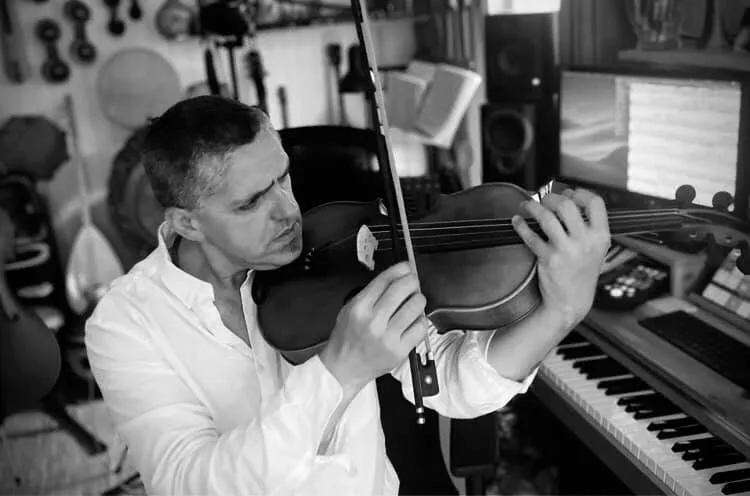
Photo: EvaMarlen, CC0, via Wikimedia Commons
I've been thinking a lot lately about a recording I made years ago — a quick run-through of a song I hadn't quite finished yet. The guitar wasn't perfectly in tune. I stumbled over a lyric in the second verse. At one point you can hear a chair scrape across the floor somewhere off-camera. I almost didn't share it.
I did anyway. And it's one of the things people still mention to me when they write in.
That's the paradox I want to sit with today: the stuff that feels most embarrassingly unfinished is often the stuff that lands the hardest.
The Myth of the Perfect Take
We live in a culture that is absolutely drowning in polish. Every song on the radio has been comped, tuned, layered, and mastered until it gleams. Every Instagram post has been filtered, cropped, and strategically captioned. Every podcast sounds like it was recorded inside a luxury pillow. And yet — somehow — people are hungrier than ever for something that feels real.
There's a reason lo-fi music has had such a sustained moment. There's a reason bedroom pop became a genre. There's a reason the live, slightly-off version of a song sometimes connects more than the official release. Audiences are smart. They can feel the difference between something that was crafted for them and something that was made — made in the middle of a life, with all the friction and feeling that involves.
Polish can communicate professionalism. But rawness communicates presence. And presence is what people are actually looking for.
What the Mess Actually Communicates
When you share something unfinished — a half-formed essay, a demo that's still finding its shape, a performance where you can hear yourself searching — you're doing something quietly radical. You're saying: I trust you enough to let you see me in process.
That trust is not small. In a world where everyone is performing their best life at all times, choosing to be mid-thought is an act of genuine courage. And audiences feel that. They lean in. They start to root for you in a different way than they do for the perfectly curated version of you.
Think about the musicians you love most. I'd bet at least a few of them have a song, a live recording, or an interview moment where they were clearly working something out in real time — and that's exactly why it got under your skin. Vulnerability isn't weakness in creative work. It's the whole point.
The Fear That Keeps You From Sharing
Here's what usually happens: you make something, and then you hold it up to some imaginary standard — usually the most polished, most successful work you've ever encountered in your genre — and your thing comes up short. So you put it away. You tell yourself you'll fix it, finish it, make it worthy. And sometimes that moment never comes.
I've been guilty of this more times than I can count. The song that needed "just one more pass." The story I kept revising until the life had been edited right out of it. The essay that sat in my drafts folder for eight months because I couldn't find the perfect ending.
Here's what I've learned: the fear of imperfection is almost never about quality. It's about exposure. Sharing unfinished work means people might see you trying. Might see you uncertain. Might see you as someone who doesn't have it all figured out.
But here's the thing — none of us have it all figured out. The people who pretend otherwise are the ones who feel the farthest away.
A Different Standard for "Done"
I'm not saying abandon craft. I'm not saying don't practice, don't revise, don't care about your work. Care deeply. Practice constantly. Revise with intention.
But there's a difference between refining your work and hiding behind it. At some point, "I'm still working on it" becomes a way of never having to be seen.
Maybe the better question isn't Is this perfect? but Is this honest? Does it say what you mean? Does it carry the feeling you were going for? Does it sound like you — actually you, not the you that you think people want to hear?
If the answer to those questions is yes, it might be time to let it out into the world.
The Connection That Only Rawness Can Make
I've played shows where everything went exactly right — the sound was great, I hit every note, the set list flowed perfectly. And I've played shows where something went sideways and I had to improvise, laugh at myself, start a song over from the beginning. The second kind of show almost always produces the more memorable conversations afterward.
Because when something goes sideways and you stay present anyway — when you let the audience see you navigate it — you're sharing something true. You're saying: this is actually happening, right now, between us. And that moment of realness becomes the whole thing.
Your creative work doesn't need to be perfect to matter. It needs to be present. It needs to carry your actual voice, your actual uncertainty, your actual joy or grief or humor. It needs to feel like it came from a human being who was paying attention to their own life.
The chair scraping across the floor? That was the best part. I know that now.
So whatever you've been holding back — the song that isn't quite there yet, the story you've been afraid to tell, the performance you're convinced no one wants to see — I'd like to gently suggest you reconsider. The world has plenty of perfect. It's always a little short on real.